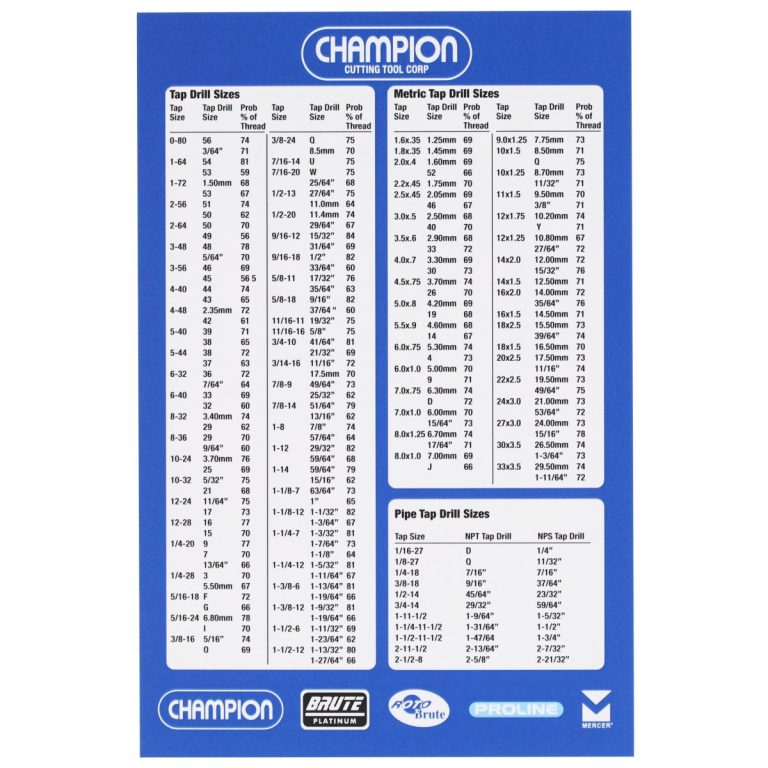
Drill Size Conversion Chart Mm To Inches: Quick Guide
A drill size conversion chart mm to inches converts metric drill diameters into inch units for easy selection.
I’ve worked in metal and wood shops for years, and I use a drill size conversion chart mm to inches every day. This guide explains how the chart works, when to use it, and how to avoid common mistakes. You’ll get clear formulas, a ready-to-use conversion table, practical tips, and real-world advice so you can pick the right drill bit fast and confidently.
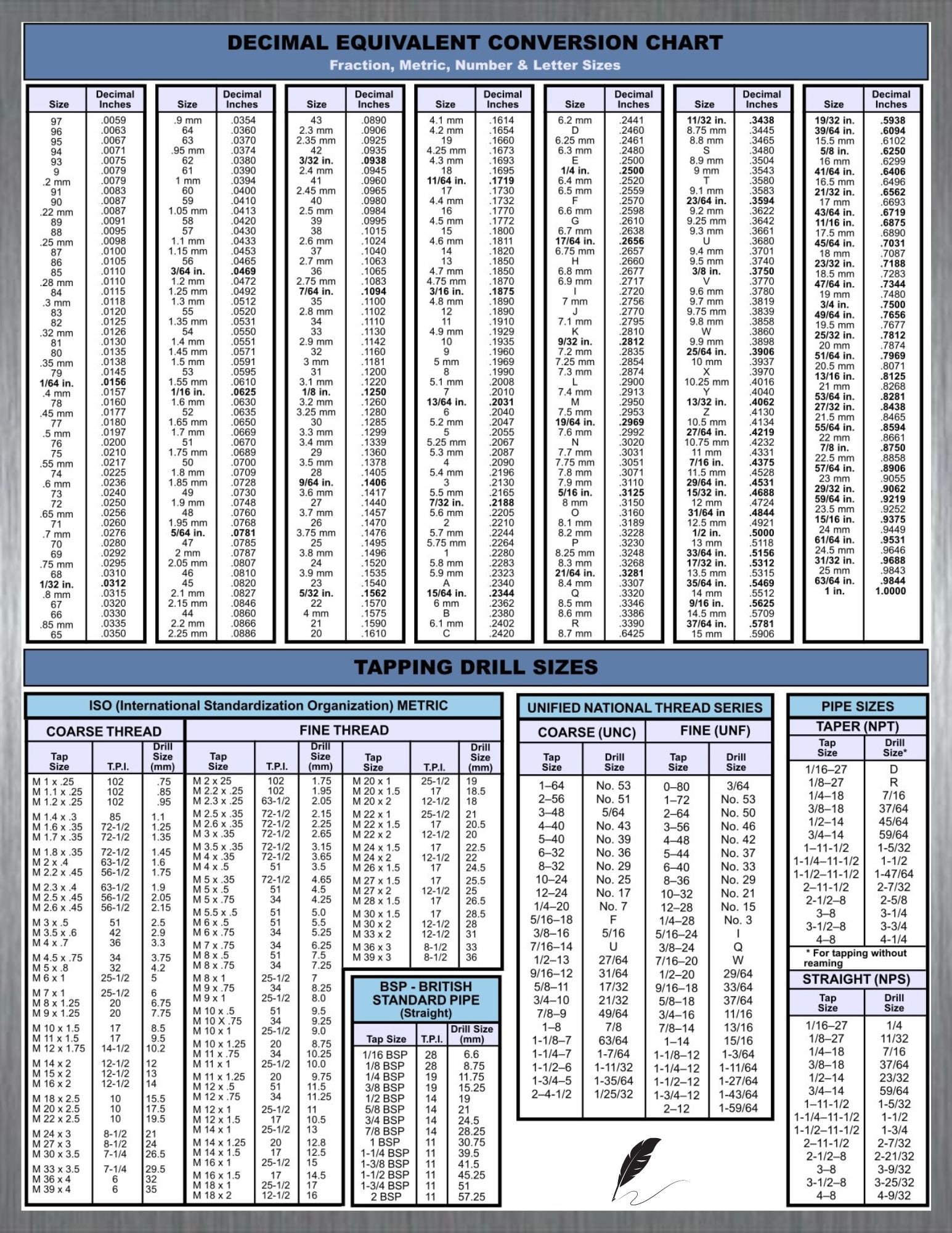
Why a drill size conversion chart mm to inches matters
Converting between metric and imperial drill sizes saves time. It prevents wrong holes and ruined projects. Many plans use inches while tools and bits use millimeters or vice versa. A drill size conversion chart mm to inches helps translate sizes so you match fasteners, taps, and reamers without guesswork.
Using the chart keeps bolt fits correct. It keeps tolerances right for press fits and clearance holes. I rely on this chart for accurate pilot holes and final holes in plumbing, furniture, and metalwork.
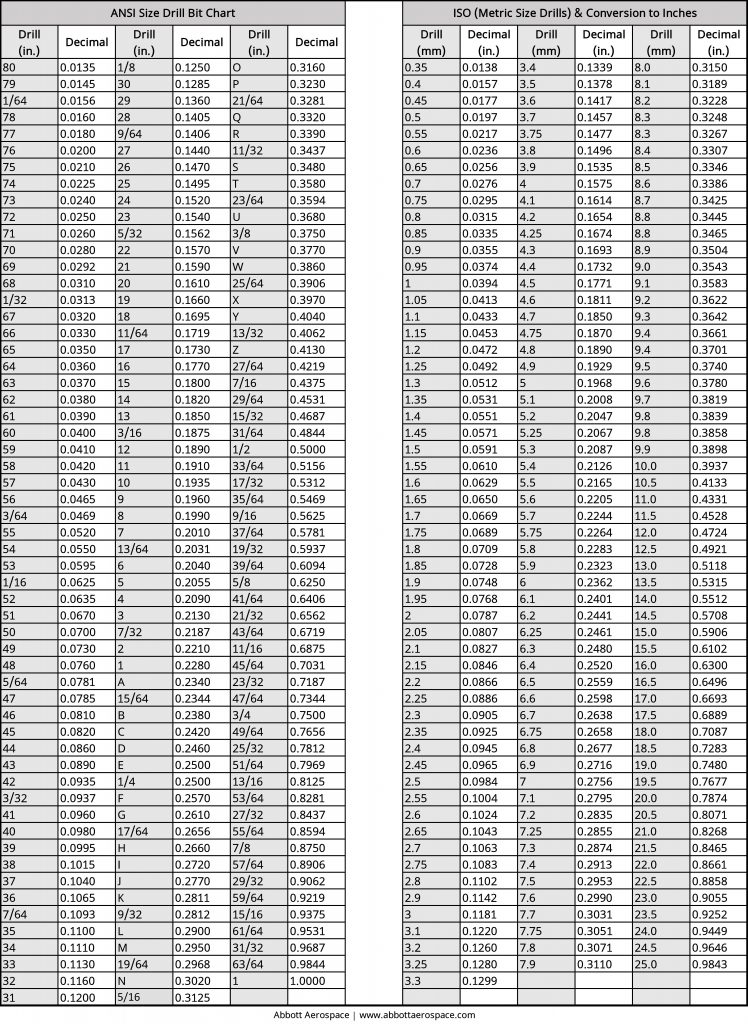
How to convert mm to inches (simple formula and examples)
To convert millimeters to inches, divide by 25.4.
To convert inches to millimeters, multiply by 25.4.
Examples:
- 3 mm ÷ 25.4 = 0.118 inch (about 3/32 inch)
- 6.35 mm ÷ 25.4 = 0.25 inch (exactly 1/4 inch)
- 0.5 inch × 25.4 = 12.7 mm
Tips for quick work:
- Keep a small reference chart or sticker on the drill press.
- Use a caliper to confirm bit diameter before drilling.
- When decimals matter, round to three decimals for clarity.
This straightforward math powers every drill size conversion chart mm to inches I use in the shop.

Quick conversion table: drill size conversion chart mm to inches
Below is a handy table of common drill sizes. Use this drill size conversion chart mm to inches to match metric bits to inch-based fasteners and vice versa.
| Metric (mm) | Decimal inches | Close Fraction | Notes |
|---|---|---|---|
| 1.0 mm | 0.039 in | 1/32 in (approx) | Tiny pilot |
| 1.5 mm | 0.059 in | 1/16 in (approx) | Small screws |
| 2.0 mm | 0.079 in | 5/64 in (approx) | Electronics |
| 2.5 mm | 0.098 in | 3/32 in (approx) | Small bolts |
| 3.0 mm | 0.118 in | 3/32 in | Common pilot |
| 3.5 mm | 0.138 in | 9/64 in (approx) | |
| 4.0 mm | 0.157 in | 5/32 in | |
| 4.5 mm | 0.177 in | 11/64 in (approx) | |
| 5.0 mm | 0.197 in | 13/64 in (approx) | Common bolt |
| 5.5 mm | 0.217 in | 7/32 in (approx) | |
| 6.0 mm | 0.236 in | 15/64 in (approx) | |
| 6.5 mm | 0.256 in | 1/4 in (approx) | |
| 7.0 mm | 0.276 in | 9/32 in (approx) | |
| 7.5 mm | 0.295 in | 19/64 in (approx) | |
| 8.0 mm | 0.315 in | 5/16 in (approx) | |
| 8.5 mm | 0.335 in | 21/64 in (approx) | |
| 9.0 mm | 0.354 in | 23/64 in (approx) | |
| 9.5 mm | 0.374 in | 3/8 in (approx) | |
| 10.0 mm | 0.394 in | 25/64 in (approx) | Common large bit |
Use the table as a guide. For critical fits, measure bit diameter with a caliper and confirm tolerances. This chart makes the drill size conversion chart mm to inches easy to access and use.
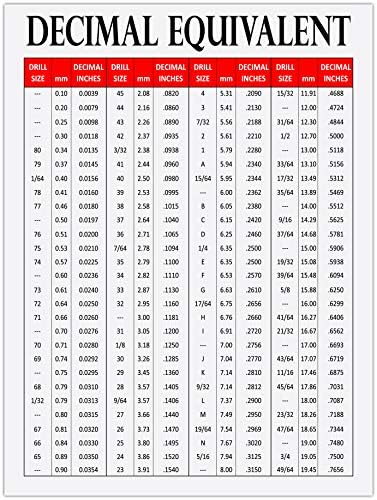
Practical tips, mistakes to avoid, and personal experience with a drill size conversion chart mm to inches
I once drilled a hole too small for a machine screw. I blamed the plan, but the real issue was a mixed unit assumption. Since then I always check a drill size conversion chart mm to inches before I start.
Best practices:
- Match the hole type to the fit: clearance, tap, or press fit.
- For tapped holes, use the recommended tap drill size, not the bolt size.
- When drilling metals, start with a smaller pilot using the chart, then ream or step up.
- Label bit cases with both mm and inch sizes for quick access.
Common mistakes:
- Relying on bit shank markings that are worn or inaccurate.
- Assuming fractional inches map exactly to metric sizes. They rarely do.
- Not accounting for coating thickness, which can change hole size slightly.
Practical check:
- Always measure the actual bit diameter. The chart helps pick the right bit, but measurement confirms it.
- Keep the drill size conversion chart mm to inches near your bench. It saves time and scrap.

Frequently Asked Questions of drill size conversion chart mm to inches
What is the easiest way to convert mm to inches for drill sizes?
Divide the millimeter value by 25.4 to get inches. Use a conversion chart for quick lookups in the shop.
Can I use a metric drill bit for an imperial bolt?
Yes, if the metric bit diameter is close to the needed inch size. Consult a drill size conversion chart mm to inches to find the closest match and check tolerance.
How accurate are decimal-to-fraction conversions in the chart?
Decimal-to-fraction conversions are approximations. Use a caliper for precision and reference a drill size conversion chart mm to inches for best match.
Should I round when converting for a pilot hole?
Round to three decimal places for conversions. For pilot holes, err on the side of slightly smaller to allow for tap or clearance needs.
Are fractional inch drill sizes the same as metric sizes?
No. Fractions and metric sizes rarely align exactly. Use a drill size conversion chart mm to inches to find the closest option.
Conclusion
A clear drill size conversion chart mm to inches makes projects simpler and more accurate. Use the conversion formula, keep a compact chart at your bench, and measure bits when precision matters. Start using the table and tips today to avoid mistakes and speed up your work. If this guide helped, try bookmarking it, share your own tips in the comments, or subscribe for more practical workshop guides.